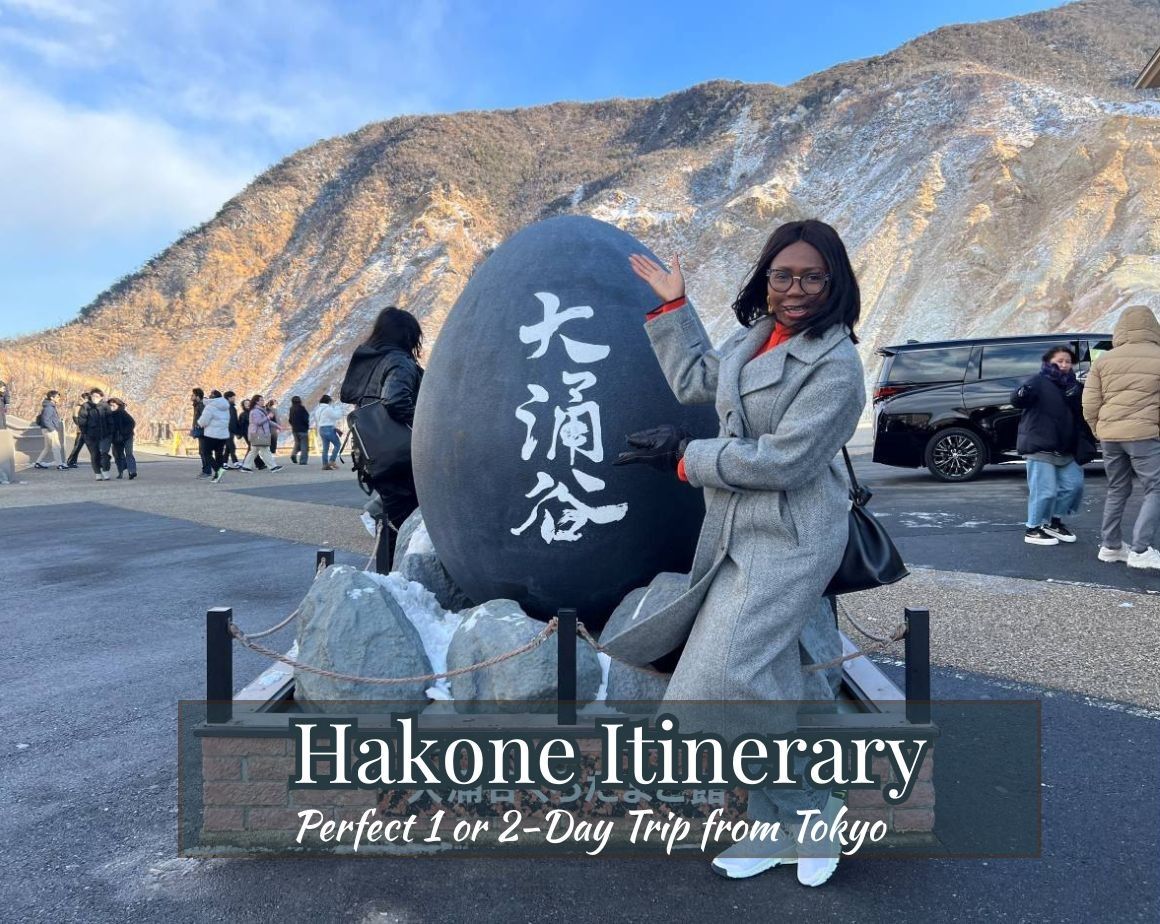
Hakone Itinerary: Perfect 1 or 2-Day Trip from Tokyo (With Hotels & Tips)
There are a number of day trips from Tokyo, and Hakone is one of the best. As a foreigner living in Japan, Hakone has been on my list since I moved here and I finally made it in my third year. But should you do 1 day or 2 days in Hakone? Here’s everything you need to know to decide, and complete itineraries for each option.
Affiliate Disclosure: This post contains affiliate links for tours, accommodations, and experiences in Tokyo. If you book through these links, I may earn a small commission at no extra cost to you. This helps support my blog and allows me to keep creating free travel guides. I only recommend services I’ve used or thoroughly researched. Thank you for your support!
1 Day vs 2 Days in Hakone: Which Should You Choose?
To be honest, I went back and forth on this one. Here’s how I landed on two days — and why I’m already planning a one-day return. I plan to return for a day trip during the hydrangea season!
Do 1 day in Hakone if:
- You have limited time in Tokyo or Japan in general
- Budget is tight (skip the accommodation cost)
- You just want highlights (hot springs, views, loop)
- You’re okay with a rushed pace
I had the great fortune of being a local when I visited Hakone, so fitting it into a weekend was convenient, but as a frequent international traveller, I GET just having time for a day trip! Make the most of the time that you do have.
Do 2 days in Hakone if:
- You want to experience a ryokan + onsen properly
- You want to relax (not rush)
- You want better chances of seeing Mt. Fuji (2 attempts = morning + sunset)
- You’re interested in Japanese hospitality/culture
My take: I did 2 days and that worked out perfectly for me. I hopped on the train on a Friday night after work and returned on Sunday afternoon. The overnight ryokan experience was worth it and I really loved the chance to enjoy onsen in the evenings after a day of exploring. To save on hotel costs, you could spend one night and 2 days in Hakone. I will do a one-day trip and update this post afterwards.
Planning Your Hakone Trip
Getting to Hakone From Tokyo:
The train is the best way to get to Hakone from Tokyo but there are three ways to make the trip by train. Here’s what you need to know about all three options.
Fastest: Tokaido Shinkansen to Odawara, then 15-minute train ride to Hakone Yumoto. Total journey roughly 50 to 60 minutes (but plan for transfers). Total cost; ¥3,300–¥4,500
Cheapest: JR Tokaido Line to Odawara – local train. Budget-friendly but expect it to take the longest. I do not recommend
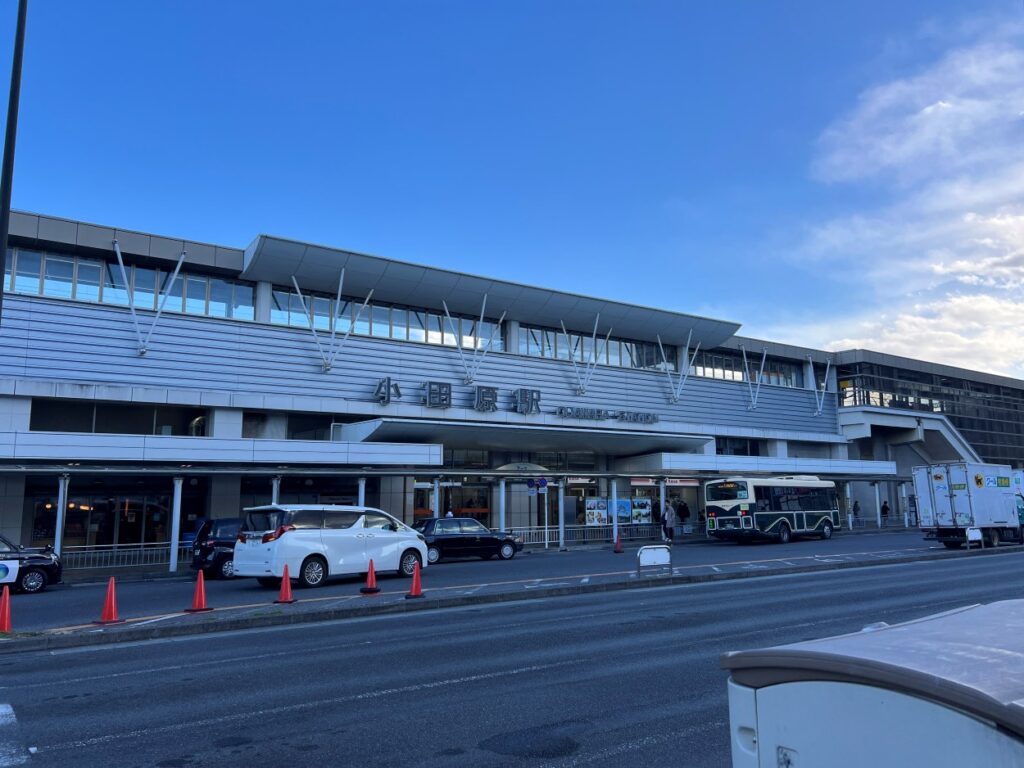
Easiest: Romancecar direct from Shinjuku to Hakone Yumoto. No transfers, no fuss.
My Recommendation (What I did):
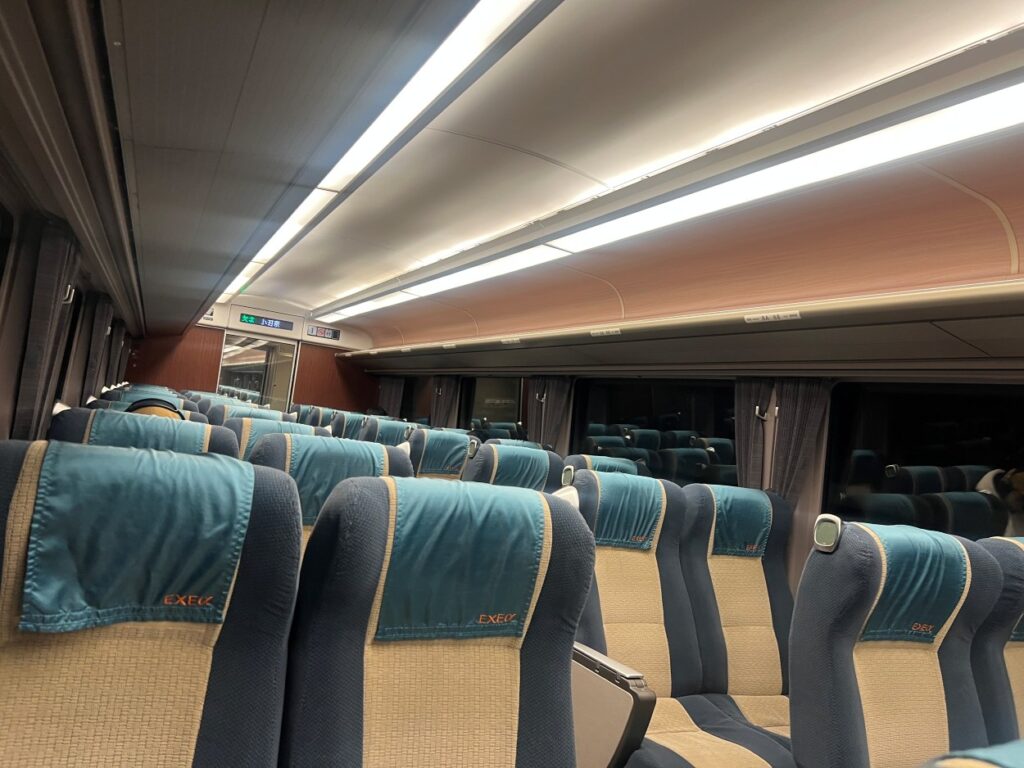
The Odakyu Limited Express Romancecar train from Shinjuku to Hakone Yumoto is my recommended mode of transport from Tokyo to Hakone. Why? It is fast, no transfers needed, and you arrive at Hakone Yumoto in 90 minutes. For MAXIMUM savings, pair it with the Hakone Free Pass! I have to warn you though, I thought the Romancecar was a special-looking train, the name is deceptive it isn’t! It is as regular as they come #justsaying.
Hakone Free Pass (essential for both itineraries)
The Hakone Free Pass deserved its own section because she is THAT girl (GenZ speak for it comes in clutch for this trip)!
The Hakone Free Pass is a cost effective transport pass for use in the Hakone area. It includes a regular roundtrip (slower) train ride from Shinjuku to the Hakone area. It allows you to ride on buses, trains, sightseeing cruises, and ropeways in the area, all inclusive! The Hakone Free Pass also gives you discounts at select shops. The tickets can be purchased for two or three-day durations. To use the pass, just show it (a QR code) when getting on and off the different modes of transportation.
Where to Purchase The Hakone Free Pass
- You can purchase the Hakone Free Pass online
- In-person, you can purchase the pass at Odakyu Sightseeing Service Centers (Shinjuku/Odawara), and ticket machines.
- Directly online on the official website but it requires more steps and must be purchased on a phone
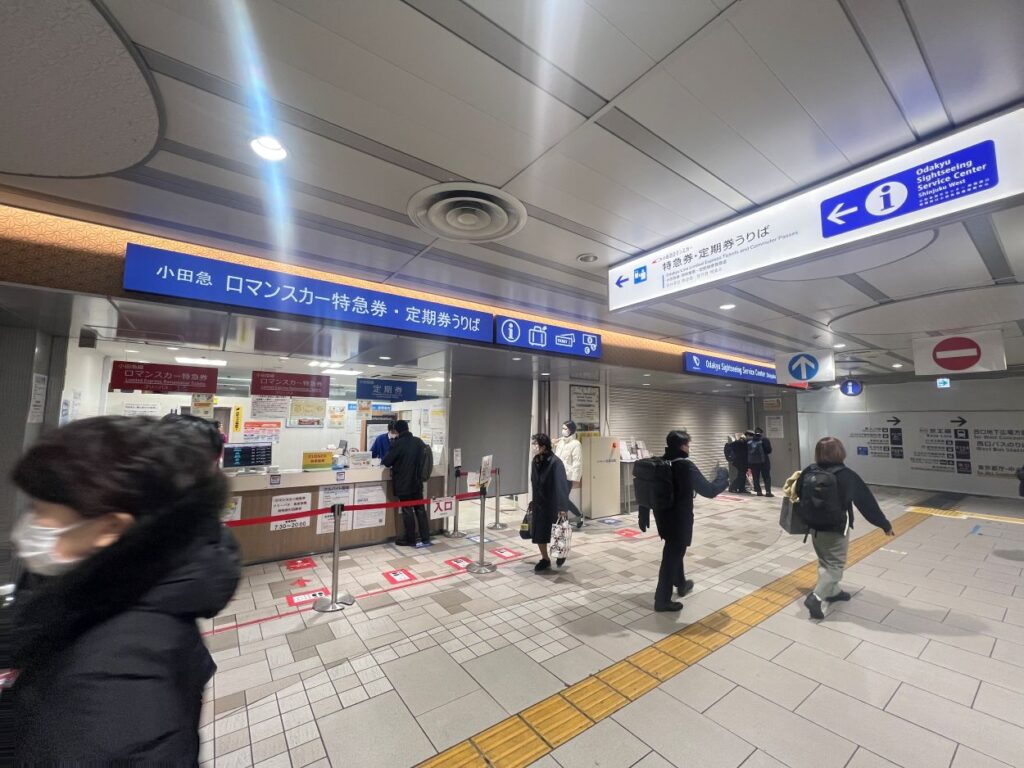
I went with option 3 and while I was a local at the time of my trip, I had some challenges pulling up my ticket but stopped at the service center and they helped me out. As such, as a visitor to Japan, I would recommend option 1. Follow instructions after purchasing your ticket and select the days you will want the pass active.
Hakone Free Pass Cost
- 2-Day Pass ¥7,000
- 3-Day Pass ¥7,500
Limited Express Romance Car surcharge (prices are each way)
- Shinjuku to Hakone Yumoto – ¥1,200 (children, 600 yen)
- Shinjuku to Odawara station – ¥1,000
When to Visit Hakone
I’m guessing you’ve already determined your time in Japan and you are now honing in on your visit to places beyond Tokyo, whether for a day trip or otherwise. So, you might already be quite restricted timewise. However, if you have any flexibility, here’s how the seasons break down.
- Autumn/Fall (Late October to November) – For all foliage, especially around Lake Ashi and on the mountains, with stunning landscapes. This is said to be the best time to visit
- Winter (December – February) – Cold weather, but better chances to see Mt Fuji and best time of the year to enjoy the onsen (hot springs). I wanted the best of the onsen experience, so I went for a weekend in January. It was cold and windy, and my fingers froze when I stepped out for some photos. But the crowds were fewer than normal, I saw a glimpse of Mt. Fuji and I loved my onsen experience
- Spring (Late March to May) – It’s the beginning of the flower season from cherry blossoms in late March to the Azaleas in April. The cherry blossom spots around Lake Ashi are particularly stunning
- Summer (June – August) – summers in Tokyo are unbearably hot, Hakone offers a bit of reprieve as the area is cooler than Tokyo. Visit in June for Hydrangeas (yes, that’s why I’m going back), and in August is for fireworks and festivals
1-Day Hakone Itinerary
This itinerary is for those going on a Hakone day trip. This one is for my daytrippers!
7:00 AM: Leave Tokyo (Romancecar)
Catch the first train from Shinjuku to Hakone Yumoto from Tokyo. On weekdays, the first train departs around 7:37am and arrives at Hakone Yumoto at 09:22am. On weekends, the first train departs at 7:00am and arrives at 8:26am. Please note that the train makes a stop at Odawara station, do not get off here.
Insider tip: Go on a weekday for fewer crowds if you can
09:30 AM: Arrive, start Hakone Loop
I recommend doing the loop counterclockwise to avoid crowds (from what I read, this is becoming a popular approach FYI.. The Hakone loop (also referred to as circuit) is a popular, scenic one-day sightseeing circuit in Japan’s Fuji-Hakone-Izu National Park that combines five different modes of transport—train, cable car, ropeway, boat, and bus.
From Hakone Yumoto station, take the Hakone Tozan Railway towards Gora station (this will take about 40 minutes). At Gora station, transfer to the Hakone Tozan cable car to Sounzan station (10 minutes).
At Sounzan station, you can enjoy the free footbath on the observation deck.while enjoying views of the Hakone mountains. Stop by the Cu-mo Hakone shop to shop for souvenirs from the area, snacks, and drinks.
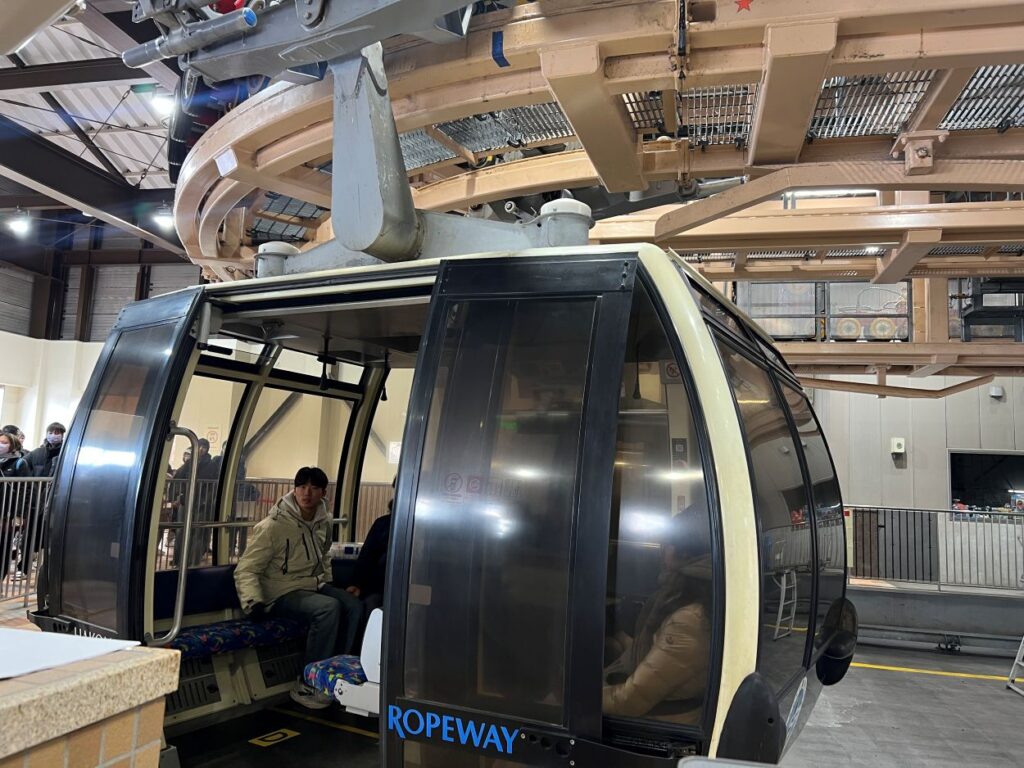
From Sounzan station, transfer to the Hakone Ropeway to Owakudani station (about 10 minutes). The ropeway offers dramatic views of the active sulfur vents in the Owakudani valley. Departures occur every 5-10 minutes. On a clear day, you can see Mt. Fuji!
11:00 AM: Owakudani Valley (black eggs!) & Lunch
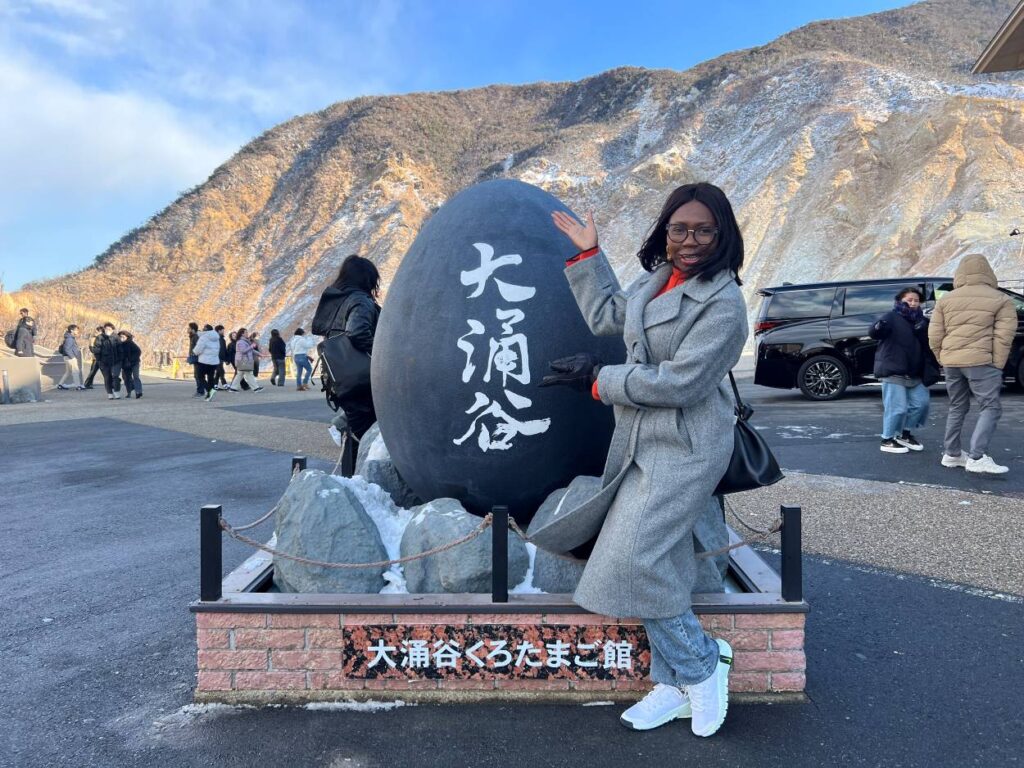
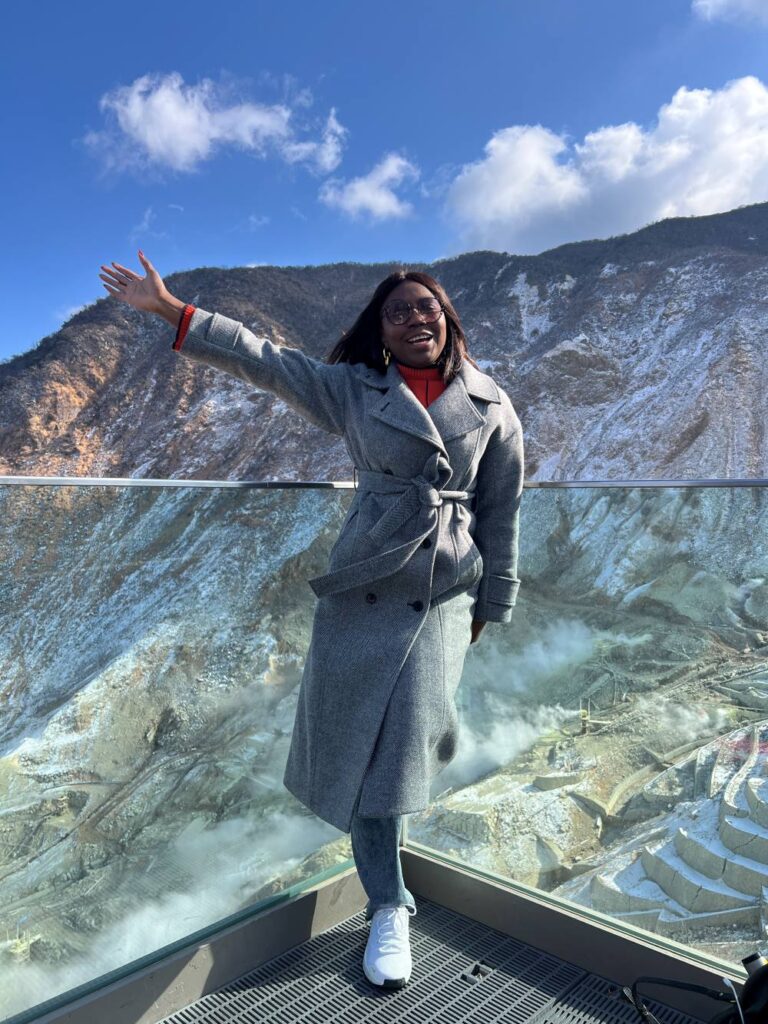
Get off the train at Owakudani. Owakudani is a great first main stop on your journey. Owakudani is home to active steaming volcanic vents in the middle of the mountains. The thermal vents are a natural wonder to experience. I probably ended up spending 2 hours here.
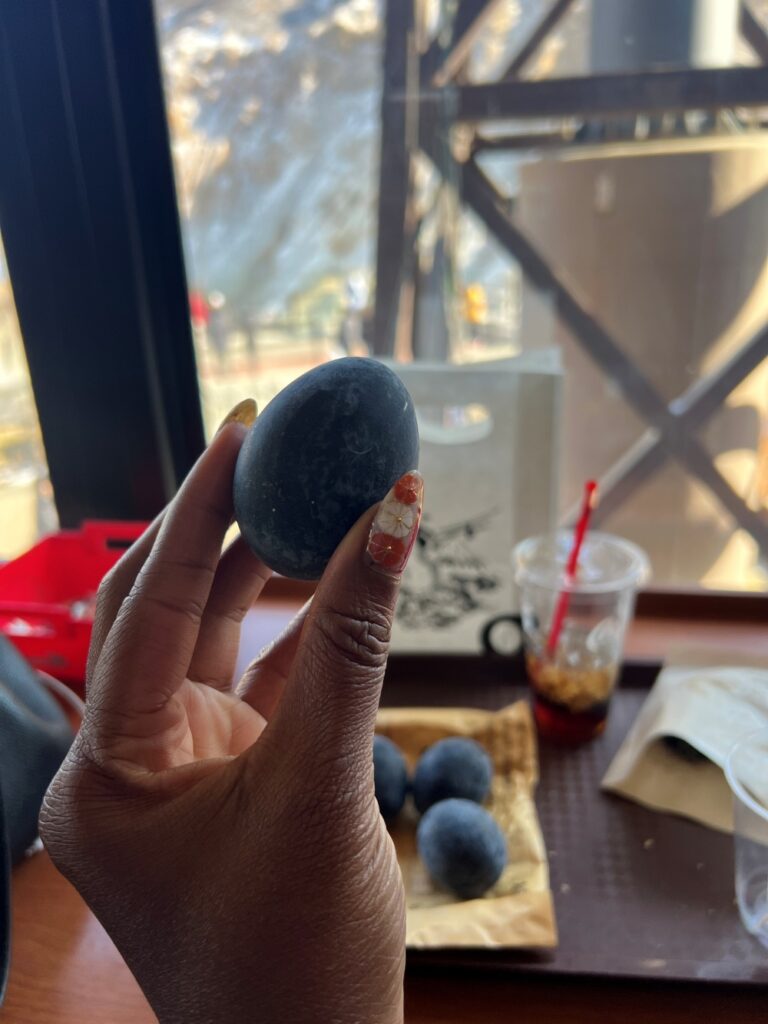
At this stop, you can eat the famous Kuro-Tamago (eggs boiled in the natural sulfurous waters and the thermal vents are a natural wonder to visit and experience. Around the Owakudani area are places to eat the famed Kuro-Tamago, eggs boiled in the natural sulfurous waters that turn their shells black. Rumour has it that eating one of these black eggs will extend your life by an extra 7 years. I bought 4, lol.
Check out the Hakone Geo Museum to learn about the volcanic history and to learn how these landscapes formed. The Museum opened in 2014 and is located in the center of Hakone Volcano. Plus, the exhibits are fun! Take in the views from the observation deck and feel and see the volcanic activity. My favourite exhibit was seeing how onsen water is made and pumped to onsen all over Hakone. There’s even an interactive exhibit and a multipurpose room for colouring! Fun for young and old and for only 100 yen!
Enjoy the views and local snacks. Beyond the eggs, there are lots of shops to get souvenirs from the local area. You’ll be spoilt for choice. You can also have lunch here based on when you started your day.
1:00 Continue on the Ropeway to Togendai (Lake Ashi Sightseeing Cruise)
From Owakudani, this is about a 30 minute ride. It is one of the world’s longest ropeway rides. I went on a windy day and I have to confess it was a tad scary at first, but I quickly got used to it and enjoyed the views. At Togendai station, walk to the attached terminal and join the queue to get on a Lake Ashi sightseeing cruise.
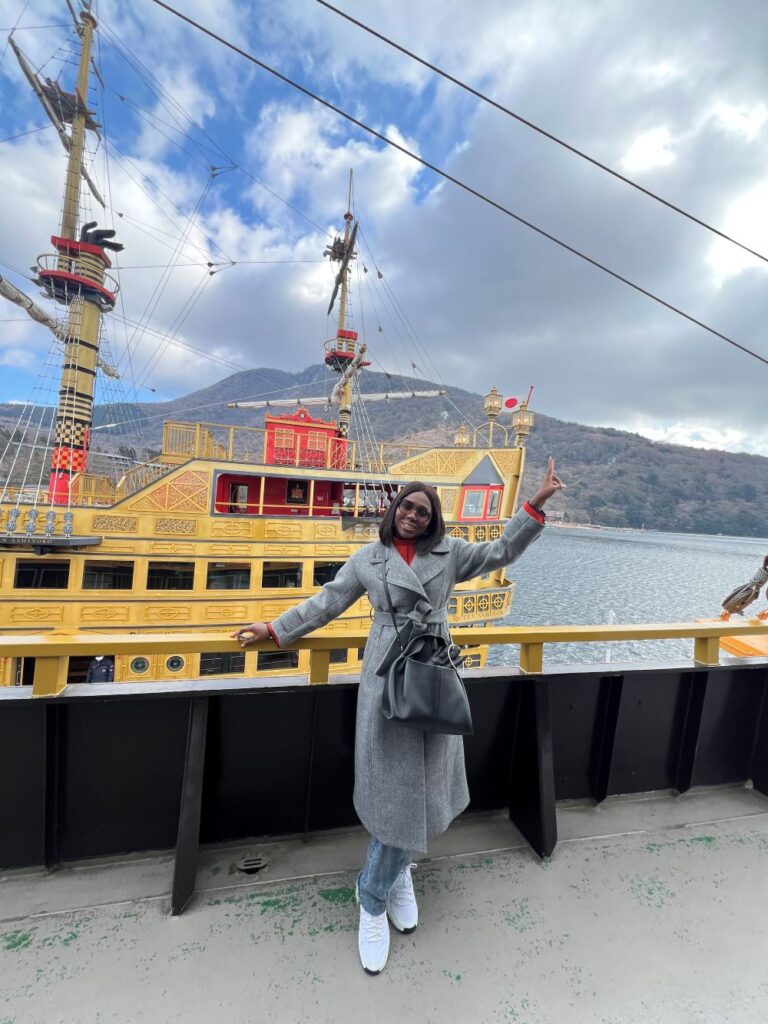
Before I visited Hakone, I thought the pirate cruise (as it is called) was a little cheesy and boring. But, am I glad that I went on it. Your girl enjoyed it! First, these boats are in great condition, and it is a wonderful ride! The cruise is one of the 8 free forms of transportation available to you with the Hakone Free pass. From the boat, you can enjoy views of Mt. Fuji as well as the famous Torii gate. On a clear day, when the boat is close to Moto-Hakone, you can get a photo of the Torii gate and Mount Fuji in one shot! I plan to go back for this shot 🙂.
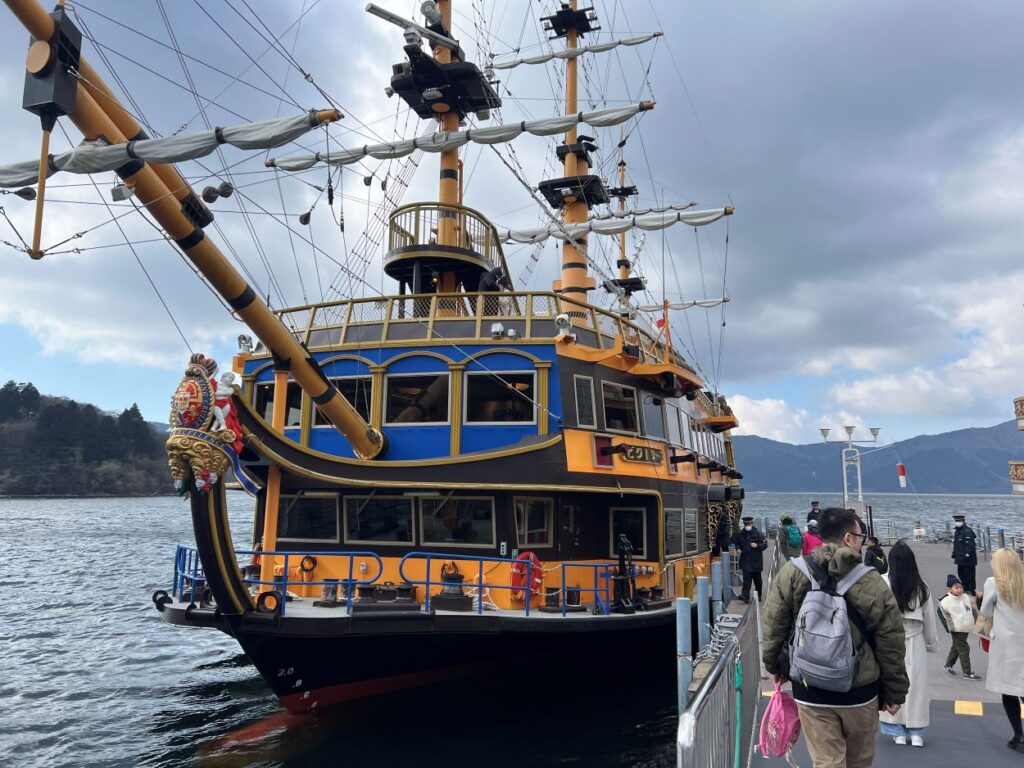
Lake Ashinoko Pirate Ship Cruise
- It goes in both directions from Togendai to Motohakone
- Departures are every 30-40 minutes
- The trip takes 25-40 minutes, or about 70 minutes roundtrip
- You can purchase a VIP pass for 500 yen and you get to sit in a special section
- If you don’t have the Hakone free pass, you can purchase tickets at the entrance to the ship
- There was a long queue to board, I skipped the queue and was fine.
2:30 PM – Hakone Checkpoint OR Snack
Hakone used to be a checkpoint to control traffic along the Tokaido, the main highway which linked Tokyo and Kyoto during the Edo era. It was an important checkpoint to control the flow of people and goods into and out of Tokyo.
Today, you can see a reconstruction of the Checkpoint located along the shore of Lake Ashi. It is a short walk from the port and costs 400 yen (discounted) with the Hakone Free pass.
If you choose to skip the checkpoint, hop over to Bakery & Table, a one minute walk from the Moto-Hakone port. I arrived just in time to catch the cruise so I missed this stop. Yup, this is on my list on a return trip to Hakone.
- Name: Bakery & Table Moto-Hakone
- Address: 9-1 Motohakone, Hakonemachi, Ashigarashimogun, Kanagawa (directly across from Moto-Hakone Port).
- Hours: Bakery operates from 9:00 am to 5:00 pm.
- Highlights: Famous for curry bread, savory pastries, and a terrace with a footbath overlooking Lake Ashi.
3:30 PM: Hakone Shrine
From the port area, turn left and walk (about 10 minutes) to Hakone Shrine for the last daylight stop on this one-day itinerary.
Hakone Shrine is a Shinto shrine dating back to 757 AD, set in a cedar forest on the shores of Lake Ashi. It’s one of the most important shrines in the Kanto region. You can spend as much or as little time exploring the shrine. I was there on a winter day and crowds were very manageable. I spent about 30 minutes at the shrine.
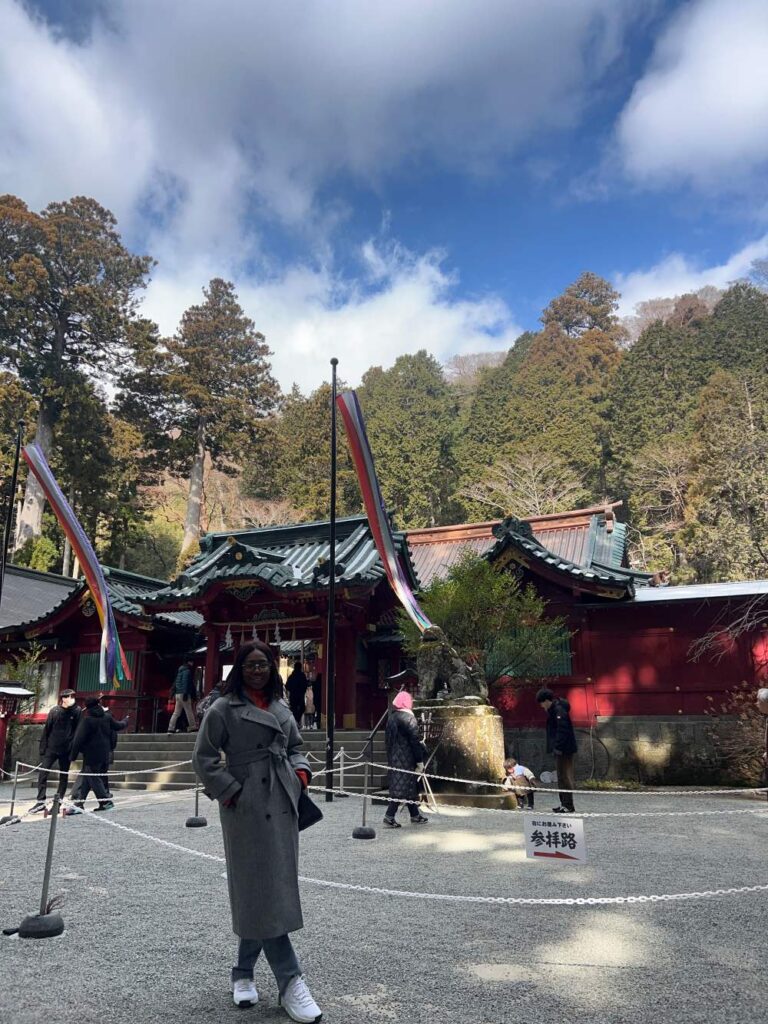
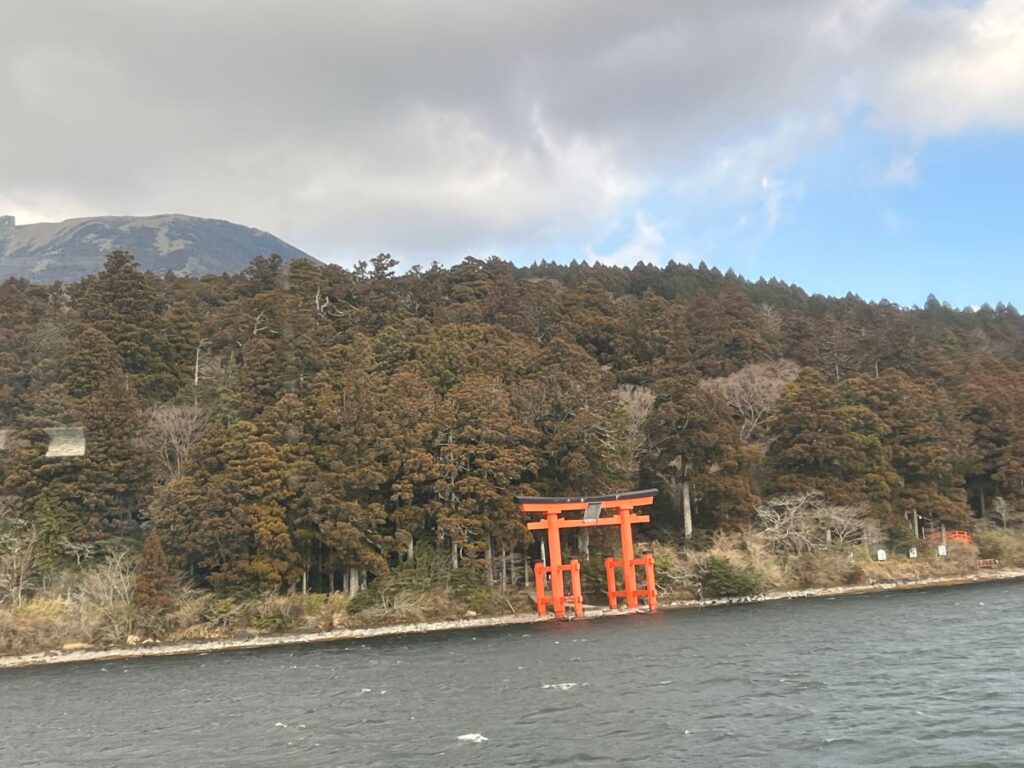
Then, it was time to get my Torii gate photo! The Torii gate in the lake, at the foot of the shrine is the hero shot of Hakone and what most people come for and I was prepared for long queues. The red gate appears to float on the water- one of the most iconic photos in Japan. Well, it was closed off in January 2026 but there was a sign indicating that it would reopen in February.
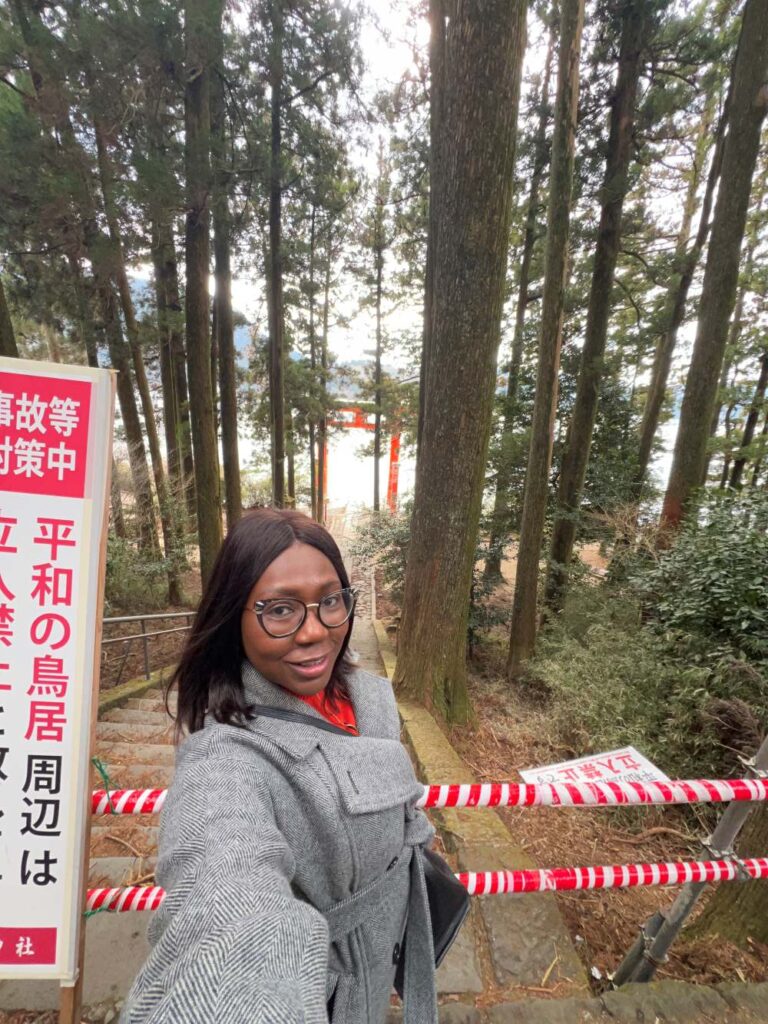
I got a photo of it from a distance and I’m not going to lie, it hurt. Again, I will be back!
5:00 PM: Quick onsen stop (public bath)
Hakone is an onsen town, and so I’m including a quick stop at an onsen for a full Hakone experience. At the earliest, onsens are open until 8pm for day trippers and while the sun may have set already, you do not need the sunlight to enjoy onsen. So, if this is on your itinerary, save it for the very last item. Just keep an eye on the time — Hakone has a way of making you forget it. Don’t get caught overdoing it on the relaxation bit.
From the shrine, you’ll head back towards Hakone Yumoto so you’re close to the train station. Walk to the Moto-Hakone bus stop and take the Hakone Tozan Bus (usually Bus Line H or K) directly to Hakone-Yumoto Station. This is usually a 35-40 minute bus ride and buses may be packed during peak season.
I didn’t make it to a public bath on my visit — I was staying at a ryokan with a private onsen. But these four are well-regarded options near Hakone Yumoto that come up consistently in research:
Here are four well-regarded public baths near Hakone Yumoto:
- Kappa Tengoku. Hours: 10:00 to 20:00 (until 21:00 on weekends)
Admission: 900 yen
Outdoor baths in the wooded slope just above Yumoto Station. The wooden bath house is slightly run-down but remains atmospheric. A five minute walk from the station.
- Yunosato Okada Hours: 11:00 to 23:00 (entry until 22:00)
Admission: 1650 yen
Various pools, most of which are outdoors. Nice views of the valley can be enjoyed from the bath house, but unfortunately not from the pools. 10 minute shuttle bus ride from Yumoto Station (200 yen).
- Tenzan Hours: 9:00 to 23:00 (entry until 22:00)
Admission: 1450 yen
Collection of nicely done hot spring pools, most of which are outdoors at the foot of a wooded slope. The bath house is a beautiful traditional Japanese style building. A short walk from Oku-Yumoto Iriguchi bus stop (bus line K).
- Hakone Yuryo
Hours: 10:00 to 20:00 (weekends until 21:00), entry ends one hour earlier
Admission: 1700 yen (weekdays), 2000 yen (weekends)
Hakone Yuryo is a public bath opened on the former site of the Hakone Begonia Garden. The facility features gender segregated indoor and outdoor baths with nice views into the forest. There is also a large selection of private baths (additional fees apply) for families and couples that wish to bathe together. A free shuttle bus operates every 10-15 minutes to/from Hakone Yumoto Station.
However, if you need to head back to Tokyo, or your next destination earlier, please skip the onsen.
6:30 PM onwards: Return to Tokyo
Head back to the Hakone Yumoto station and catch the Romancecar to Shinjuku. The last train departs at about 19:50.
This is a doable but exhausting day. You’ll get a taste of Hakone but won’t have time to truly relax. If you can swing it, stay overnight. But if this is all the time you have, go for it! Ganbarimasu!
2-Day Hakone Itinerary
Within 2 days, you can actually relax and see Hakone at a slower pace, while seeing more of the area. You’re not rushing. You can enjoy the onsen at sunset AND sunrise. Plus, you have more chances to see Mt. Fuji clearly.
Day 1 in Hakone:
Morning: Arrive and store bags at Hakone Yumoto-station, start the Hakone loop following the Day 1 itinerary above. However, you don’t have to rush and you can skip the public bath because at the end of your day, you’re checking in to your hotel
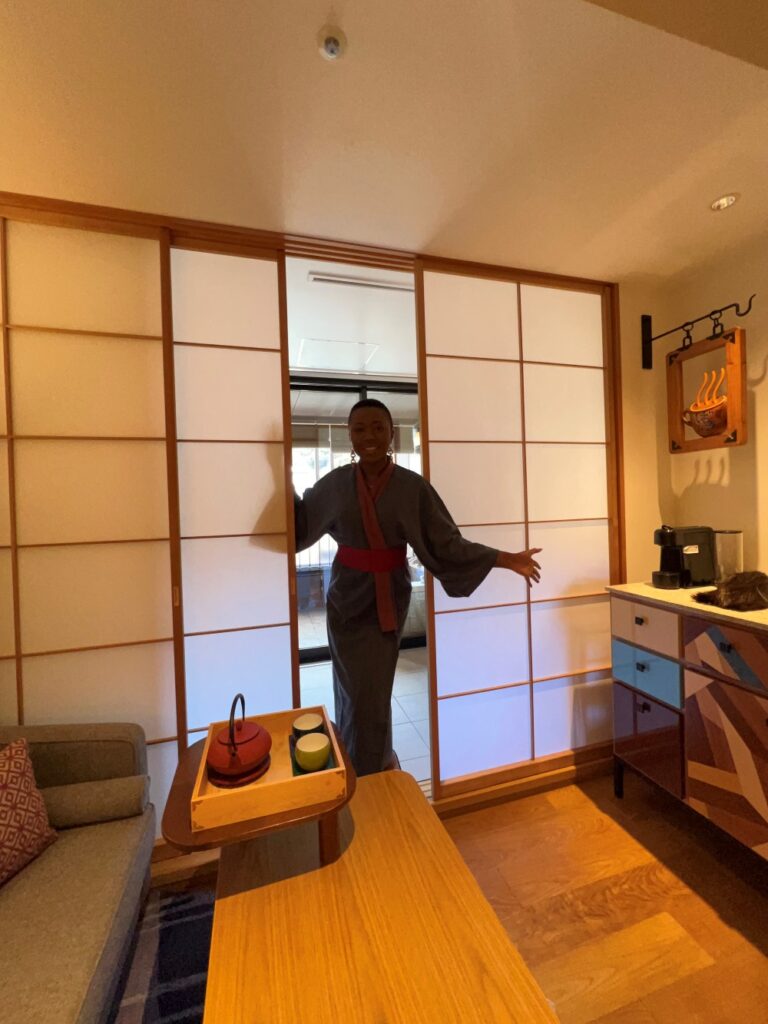
6:00 pm Ryokan Check-in: After a day of sightseeing, you finally get to check into your hotel. If you aren’t staying in a ryokan elsewhere on your trip, then I suggest trying one here. Otherwise, a hotel will do just fine. However, you MUST stay in accommodation with an in-house onsen. If you want to go all the way (like I did – because YOHOO – You Only Hakone Onsen Once), then get a room with a private onsen).
Keep reading for my best suggestions on where to stay in Hakone
7:00 pm Onsen baby: After a day on your feet, the onsen is your reward. I mean, this is half the reason you are in Onsen town! Take off the stress of the day by relaxing in the onsen.
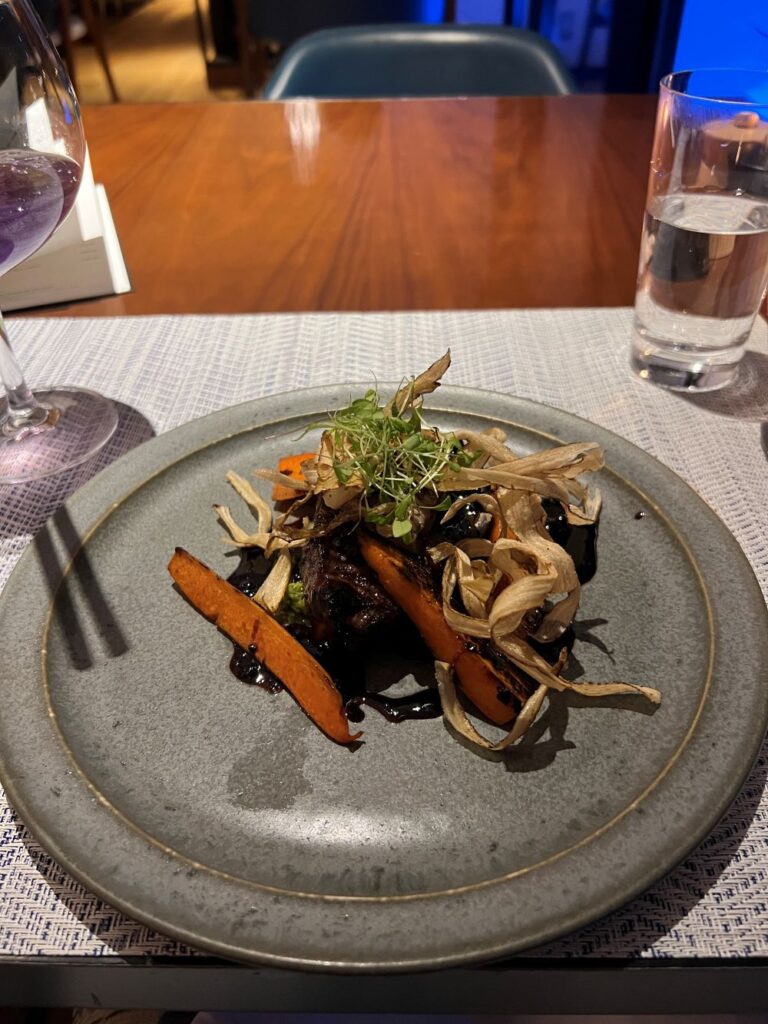
8:00 pm Kaiseki Dinner: Then slip into your yukata and head to dinner. Kaiseki is a multi-course traditional Japanese meal, beautifully presented and usually included in your ryokan stay. After that, there’s really only one thing left to do. Sleep well — you have a sunrise onsen waiting.
Day 2 in Hakone:
On this second day, you wake up and enjoy your private onsen or the onsen at your hotel/ryokan. You take the morning in slowly, and enjoy breakfast at your hotel. If your hotel has views of Mount Fuji, enjoy the views from your room while eating breakfast there. After checking out and storing your bags, it is time to do some more sightseeing.
Late Morning: Hakone Open Air Museum
Since I stayed in Gora, getting to the Hakone Open Air museum was quite convenient. I did not know this Museum existed until a week before my trip and it was hands down one of my favourite stops on my visit to Hakone. This is saying a lot for someone that isn’t quite a museum person.
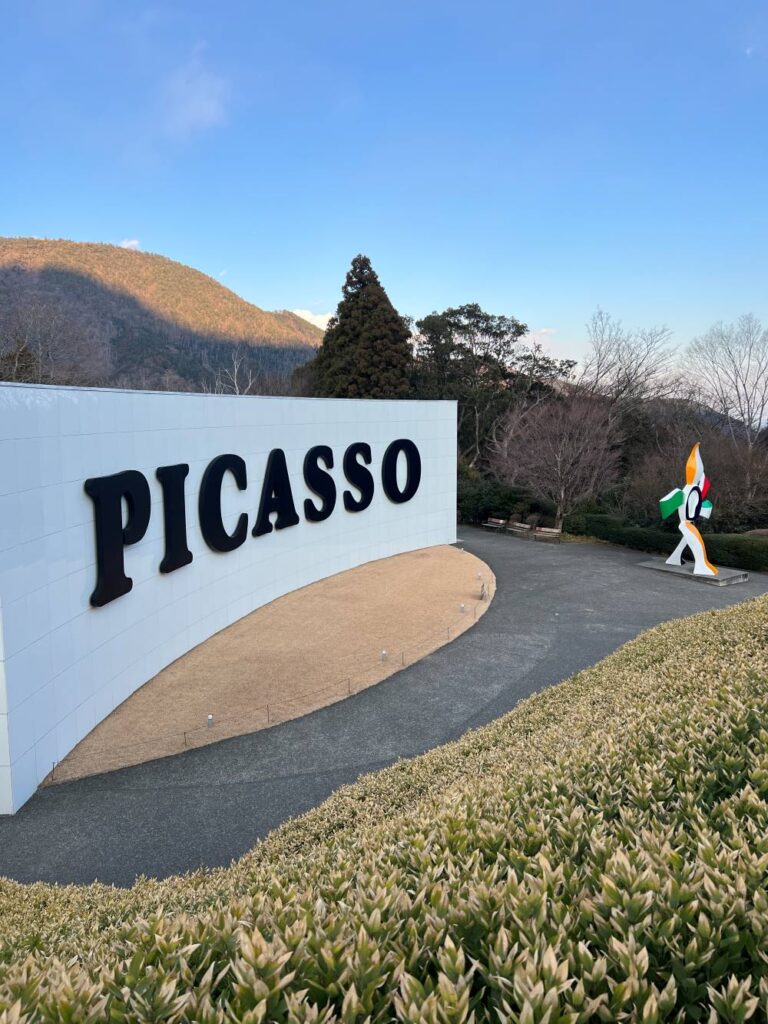
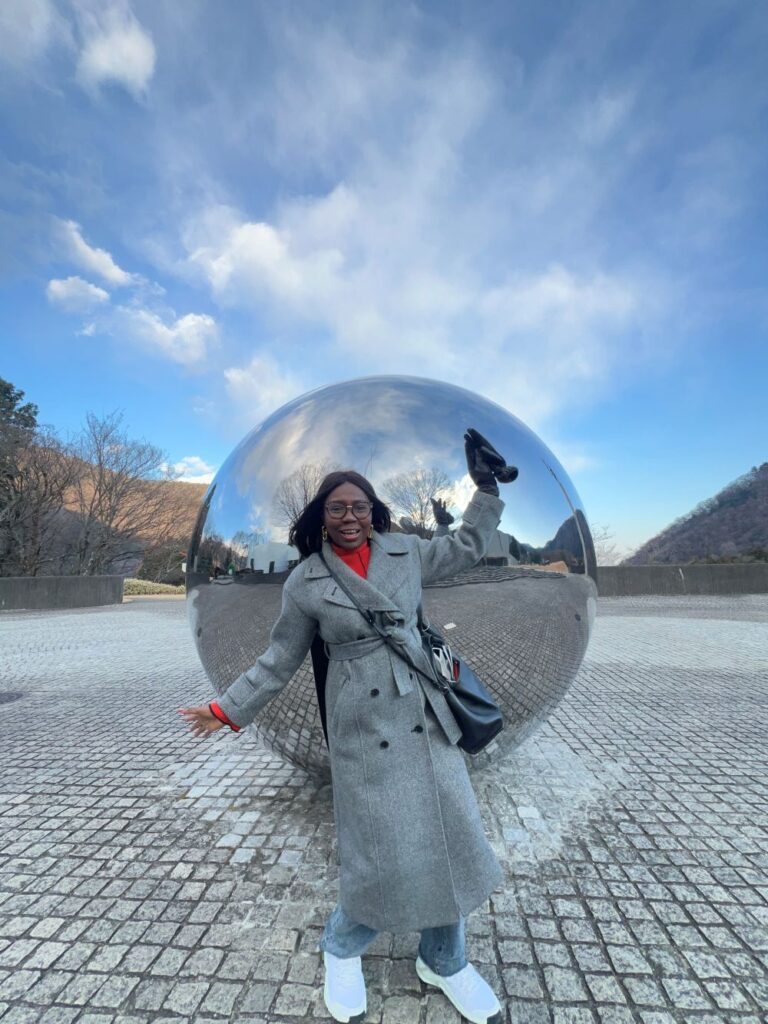
The Hakone Open Air museum is the first open air museum of its kind in Japan. Once you pass through the entry tunnel, it opens up to the grounds, a garden art museum under blue skies and green mountains. Oh, and there’s a free foot bath you can enjoy.
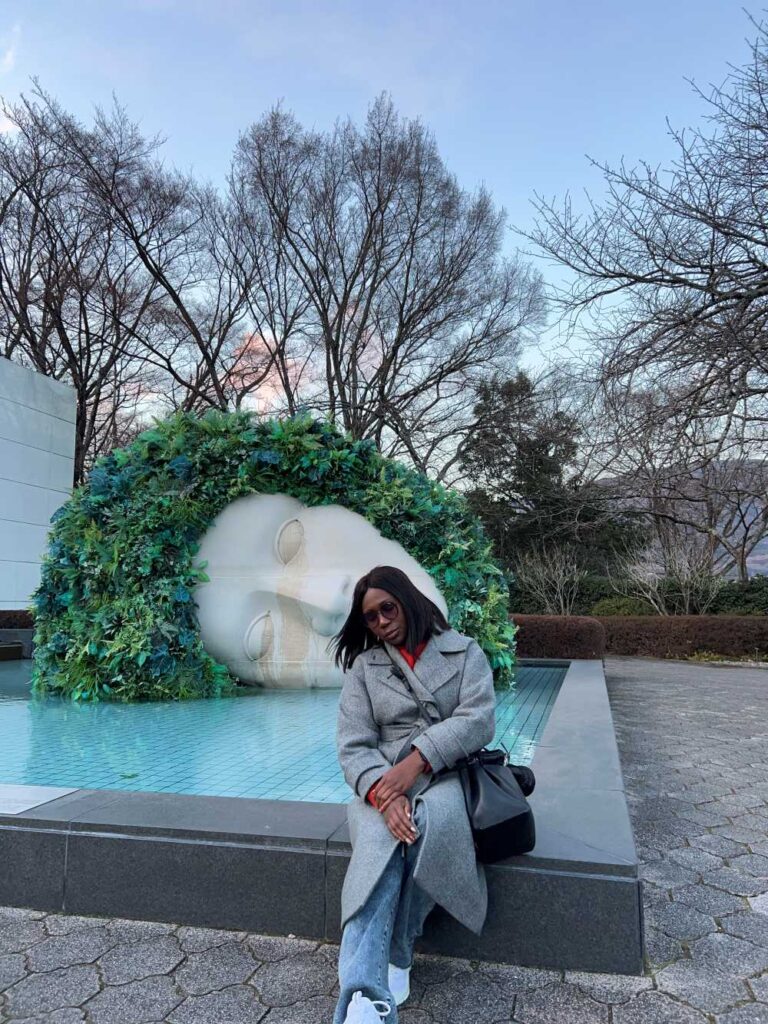
I was impressed by the scale, the art, the grounds, and a quite impressive Picasso collection! It is a great stop for families with kids as many installations are kid-friendly. The Hakone free Pass provides a 100 yen discount on your otherwise 2,000 yen entry fees for adults. With the Free Pass, it costs 1,500 for high school/college students and 800 for elementary or junior high students.
I only wish I had just a little more time at the Hakone Open-Air Museum. I could have been there for hours taking it in. It would be perfect in the spring or autumn.
- Hakone Open Air Museum tickets
- Hours: 9am to 5pm
Hakone Museum of Art (Optional, if you want to skip the gardens)
While I didn’t have enough time to visit, this was a spot on my itinerary. Hakone Museum of Art is the longest running museum in the Hakone area. From what I read and hear, the art collection is decent, but the garden is excellent!
- Location: Shinsekyo Garden
- Address: 1300 Gora, Hakone, Ashigarashimo District, Kanagawa
Afternoon: Final spots, return to Tokyo
Nicolai Bergmann Hakone Gardens
While I do not have a green thumb in my body, God, do I love flowers and being amongst beautifully manicured flower gardens. As a fairly frequent buyer of Nicolai Bergmann blooms in Tokyo, I had to stop by the Hakone gardens when I was in town. If this is up your alley, then consider making a stop here.
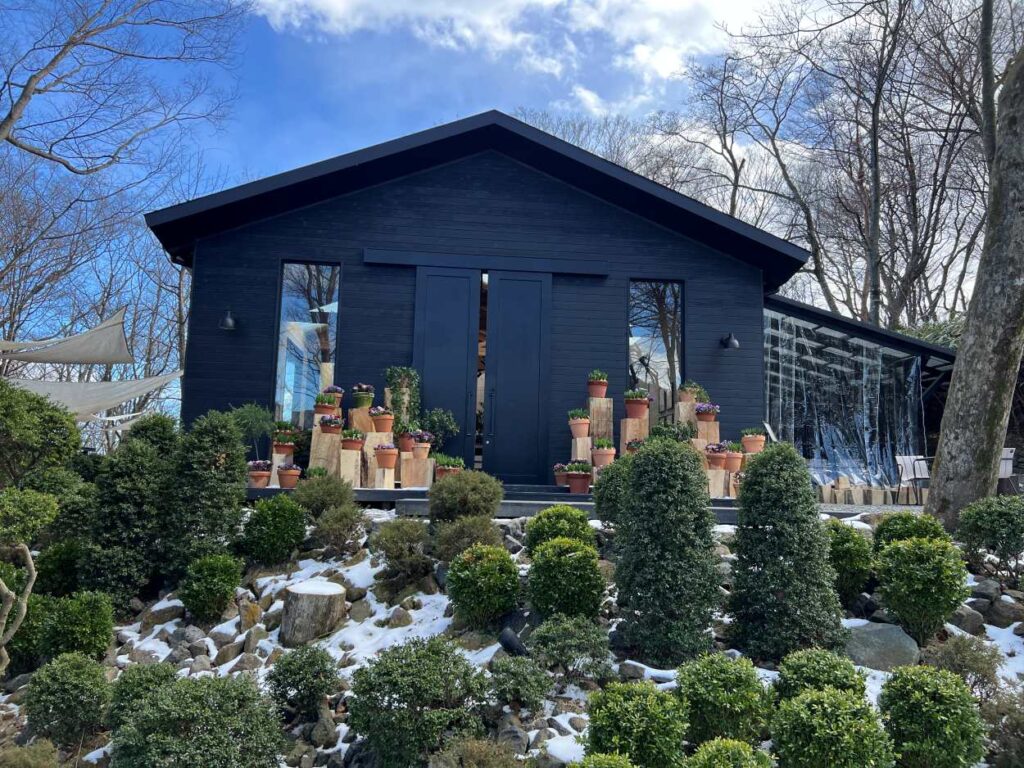
The Hakone Gardens are a haven designed and created by Danish floral artist Nicolai Bergmann, who has been based in Japan for over two decades. The garden is designed to feel immersive — you’re meant to wander slowly, not rush through. There’s also a cafe onsite.
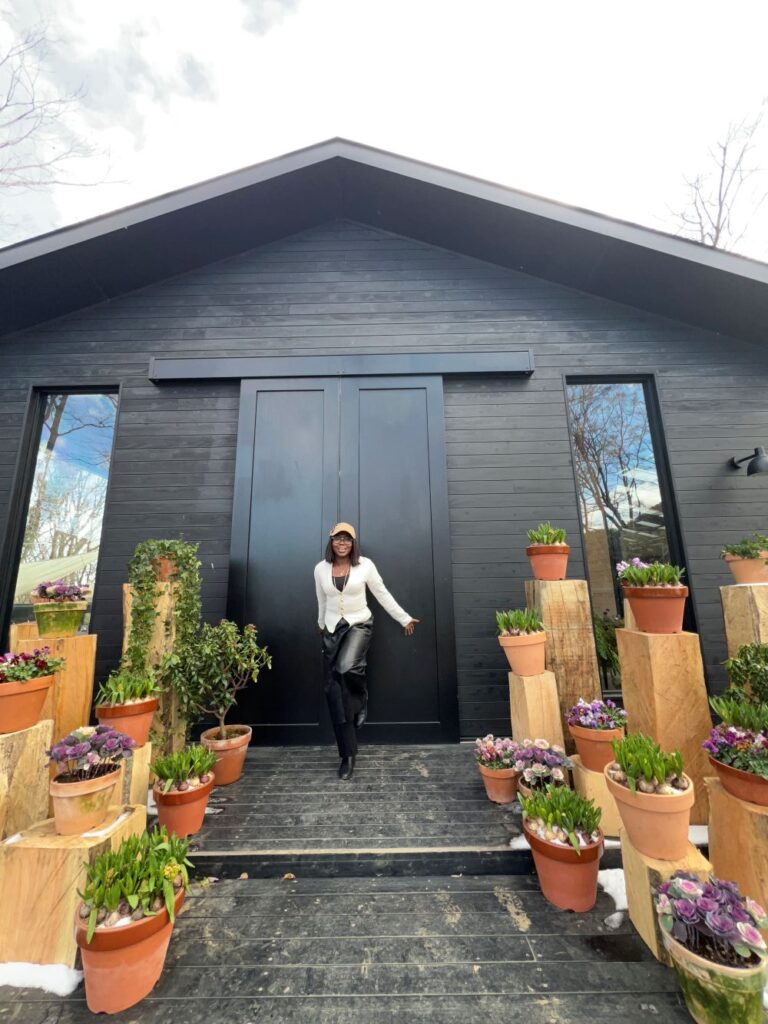
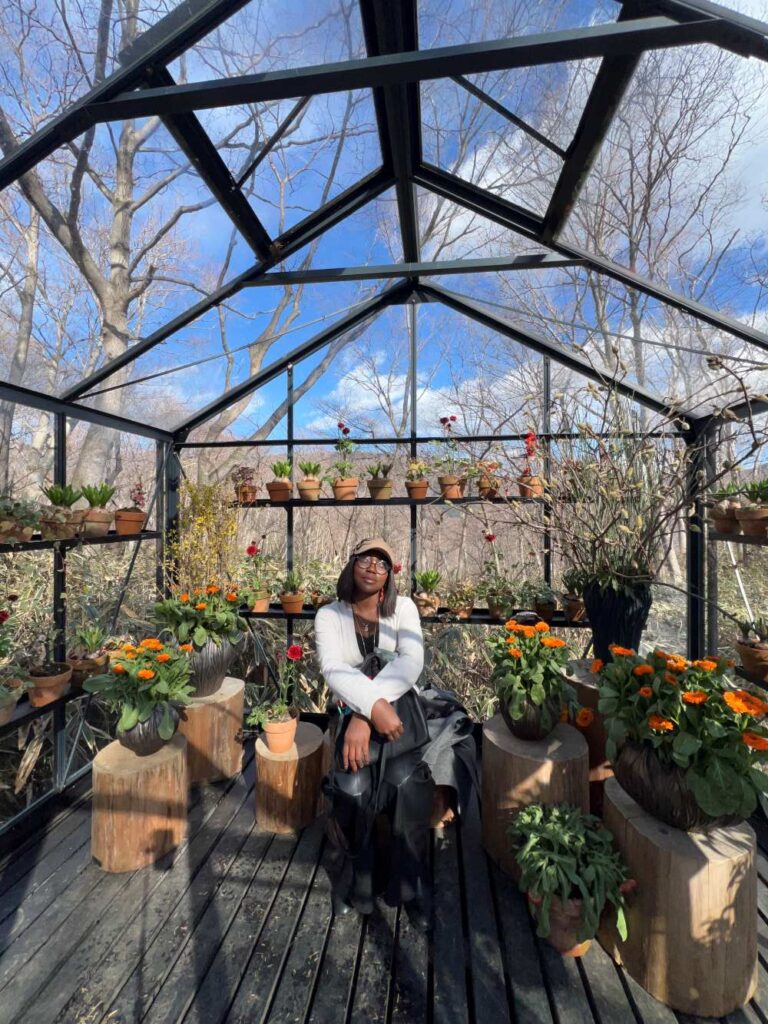
As my very last stop in Hakone, I took a taxi from my hotel in Gora to the gardens. This is probably the only way to get here and the only time I’m outrightly suggesting taking a taxi (otherwise the costs can add up). It was only a ten minute ride from my hotel. After exploring the gardens, I had lunch at the cafe before I headed back to my hotel to collect my bags. Despite the winter weather, and limited winter blooms, I enjoyed the visit. I can only imagine what it will look like in warmer weather. You guessed it, I plan to return!
- Address: 323-119 Gora, Hakone, Ashigarashimo District, Kanagawa 250-0408
- Hours: 9am to 5pm daily but closed on Wednesdays
- Tickets: 1,800 yen (1,500 per adult if purchased online)
After this, it’s time to head back to Tokyo, or onwards to your next destination. You can return from Hakone Yumoto station or Odawara station. Fun fact: my hotel offered a free shuttle to Odawara station, so I caught the Romancecar from there. Another reason to choose your accommodation wisely!
Where to Stay in Hakone
When planning my stay in Hakone, one of the first pieces of the puzzle I needed to solve was what part of town to stay in. I decided to stay in Gora and I’ll share why. However, I will share my top 3 recommendations of areas to stay in Hakone, as well as mid-range to luxury hotel options in each area. When deciding where to stay in Hakone, consider the following:
- Private or public hot springs onsite
- Food – for ease of dining, I recommend booking hotels with kaiseki dinner courses
- Transportation – proximity to station or the provision of a shuttle for patrons
Gora
I chose Gora for its quieter atmosphere and proximity to the Open Air Museum, and Nicolai Bergmann gardens. It sits higher up in the mountains than Hakone Yumoto, which means cooler temperatures, fewer crowds, and a more immersive feel while still being in the center of things and not needing a car. In summer especially, the higher elevation makes a noticeable difference compared to the heat of Hakone Yumoto.
Hotel Indigo Hakone Gora – This is where I stayed and while it was a splurge, it was on my list for two years! It is a perfect blend of Japanese and Western taste. Offering a footbath with views, private onsens, and a public onsen for guests, this luxury stay was absolutely worth it! Oh, and yukatas, library, games, breakfast, excellent service, and the shuttle to and from train stations are the luxury touches that set the property apart!
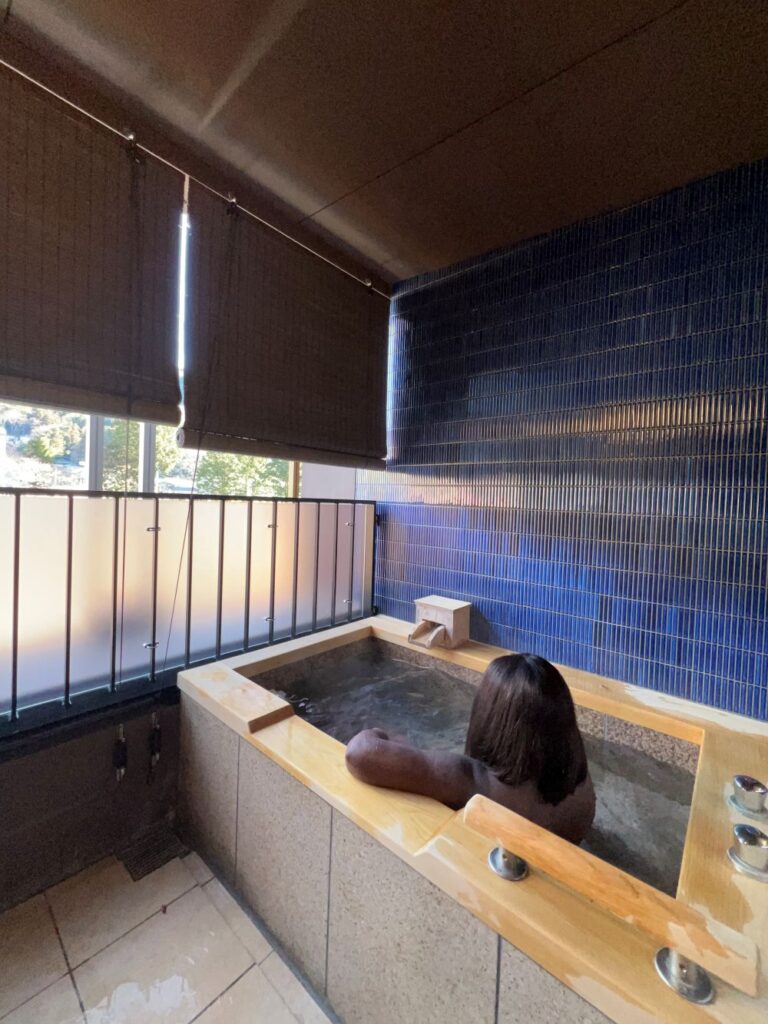

Hakone Kyuan Gora – I almost booked Hakone Kyuan Gora and it was a genuinely tough decision. While I ultimately chose Hotel Indigo, this one stayed on my radar for a future visit, and I’m sharing with you to make YOUR decision. Gorgeous Ryokan property away from crowds yet close enough to train. Small, intimate with balcony and in-room onsen. If you want the full Ryokan experience, this is it!
WPU Hakone Hotel 3-star with great reviews, free parking, onsen, and family rooms
Hakone Yumoto
This area scores highly on convenience due to proximity to the station. In addition, this part of town is bustling with activities from souvenir shops to restaurants.
Yumoto Fujiya Hotel– Centrally located, featuring large public baths. This 4-star hotel is a Hakone institution. You cannot go wrong here!
Rohen HakoneYumoto – A 6-minute walk from the train station, A solid, no-frills base for travellers who want to spend their budget on experiences rather than accommodation.This is budget friendly and has a good breakfast. While there is no onsen onsite, you can use one of the suggested public baths for a nominal fee
Sengokuhara
This area is more remote, offers beautiful landscapes, and is less touristy. I recommend it for the traveler seeking luxury, nature, and art, couples on romantic getaways, art lovers, and those wanting a quiet retreat from Tokyo. Now, this location is best if you have a car. If you’re going to splurge anywhere in Hakone, Sengokuhara is where I’d do it. These two accommodation options are definitely splurge worthy (based on my research).
Kinnotake Sengokuhara – intimate, private experience in a discreet location. Private onsens are available. It is an hour long bus ride from Odawara station, and a taxi would add up. Rent a car, or plan accordingly for transportation based on your time and budget.
Hakone Kairai – this is an adults-only private villa complete with private onsens, and limited to one group per stay. It is secluded and STUNNING. I want to goooo!!!
Practical Tips For A Hakone Trip
- If you can, travel to Hakone on weekdays to avoid crowds
- Pack layers as the area is colder than Tokyo
- Pack handwarmers and gloves when visiting during winter
- Winters are best for seeing Mount Fuji from the lake. This is why I went in winter.
- The buses can be pretty packed, especially on weekends. I would save cash for one taxi ride especially if on a day trip and running behind. Taxis add up through so I wouldn’t plan to do this all day
- Most public baths in Hakone do not admit tattooed guests. Check the policy of your chosen onsen in advance to avoid disappointment.
- Carry some cash on you
Conclusion
Whether you have 1 day or 2, Hakone is worth the trip from Tokyo and is one of my top recommendations for a day trip outside the city. If you can, I highly recommend staying overnight—the ryokan experience and relaxed pace make all the difference. But even a day trip can give you hot springs, Mt. Fuji views (hopefully), and a taste of Japan beyond Tokyo
Final reminders and quick links to help you with booking and planning
Japan Trip Planning? I’ve Got You
There’s so much more where this post came from. If you’re planning a trip to Japan, here are tips to help you plan the trip:
- Read my 5-Day Tokyo itinerary to help you plan the rest of your trip
- Go on a day trip skiing and snowboarding from Tokyo
- What to know before traveling to Japan
- What to do before your Japan trip
- 45+ Souvenirs from Japan




I absolutely loved Hakone when I visited. It was so wonderful and I was lucky to experience the Torii gate without any crowds – I was the only one there for over an hour! Watched the sunrise over Lake Ashi, it was marvellous! I also used the Romance Car – and it felt very romantically ordinary, haha!
The Nicolai Bergmann Hakone Gardens looks wonderful even in winter. I imagine summer would be bursting with even more colours and blooming flowers. This is a great guide! Looking forward to seeing your future trip for the hydrangeas.